
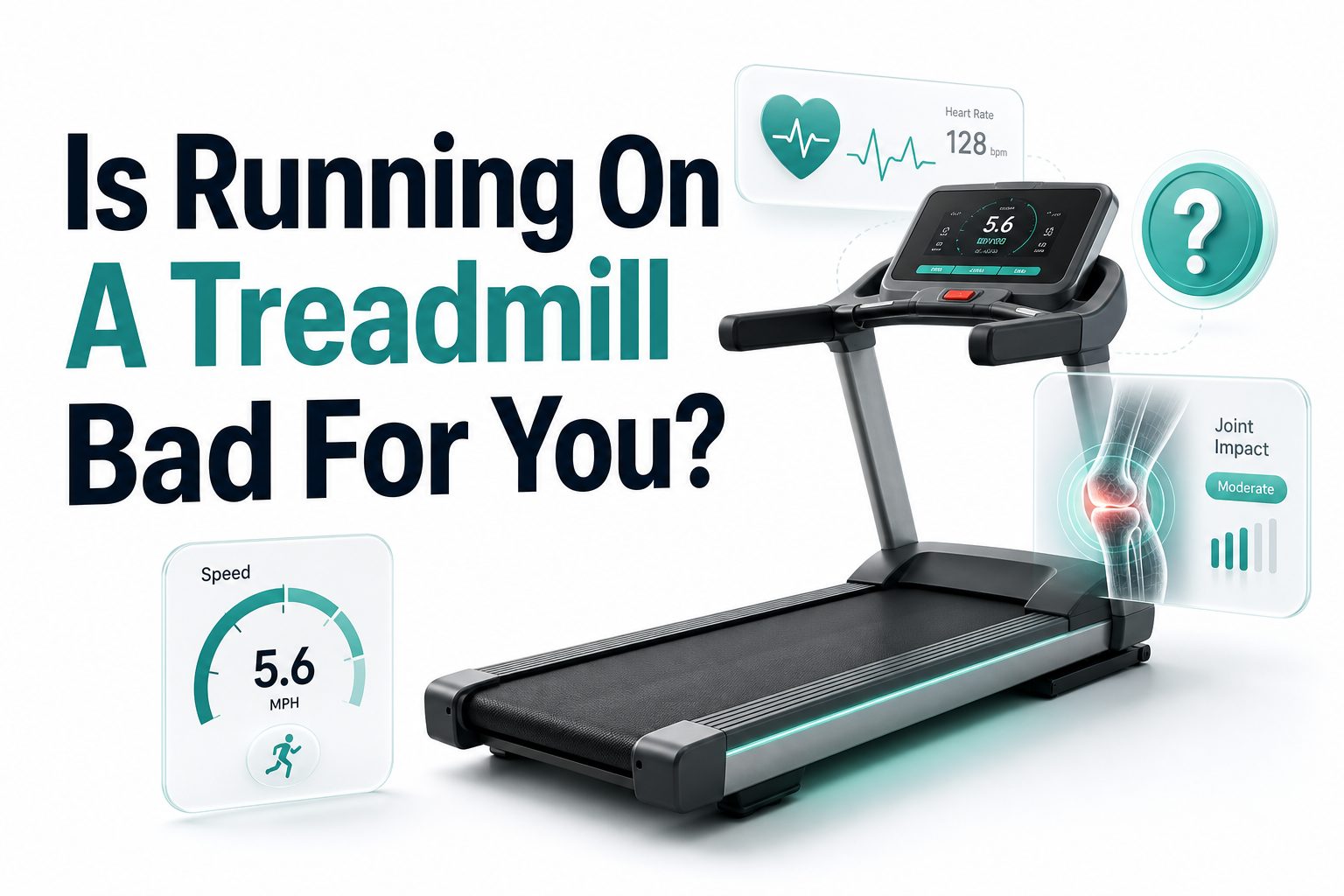
Many runners ask whether treadmill workouts harm the body or offer a practical way to stay consistent. The short answer is that treadmill running is not bad by default. Like outdoor running, it depends on your form, training volume, speed, footwear, and recovery habits.
A treadmill can support cardiovascular fitness, weight management, and regular movement, especially when weather, safety, or time limits make outdoor running difficult. Problems usually appear when people run too often, ignore pain, use poor posture, or increase intensity too quickly.
This guide breaks down the benefits, drawbacks, and safer ways to use a treadmill. It also covers joint impact, muscle balance, incline settings, injury prevention, and when outdoor running may be a better choice for your goals.
The Real Answer
Treadmill running is generally safe for healthy adults when done with smart pacing and proper technique. The moving belt changes the feel of running slightly, but it does not automatically damage your knees, hips, back, or feet.
Most treadmill-related problems come from training errors. Running too fast, skipping warmups, holding the handrails, or repeating the same workout every day can increase stress on the body. These issues are manageable with better habits and variety.
For many people, the treadmill is a useful training tool rather than a risk. It gives steady pacing, controlled incline, predictable footing, and easier access to exercise. The key is treating it as real running, not as a shortcut.
Treadmill Benefits
A treadmill makes running more accessible because it removes many common barriers. You can train during rain, heat, darkness, icy roads, or busy schedules. That consistency matters because fitness improves through repeated sessions, not occasional perfect workouts.
The controlled surface can help runners manage pace more accurately. Beginners often benefit from seeing speed, time, distance, and incline clearly. Experienced runners can use these settings for tempo runs, intervals, and recovery sessions with less guesswork.
Treadmills also reduce some outdoor hazards, such as uneven sidewalks, traffic, poor lighting, and slippery paths. This can be helpful for people returning from injury, older adults, or anyone who feels safer exercising indoors.
Key reasons treadmill running can work well
Steady pacing helps beginners avoid starting too fast.
Indoor training supports consistency during bad weather.
Incline settings can add challenge without increasing speed.
Softer belts may feel easier than hard concrete for some runners.
Workout data makes progress easier to track over time.
Joint Impact
Treadmill running still creates impact, but that does not mean it is harmful. Bones, tendons, and muscles adapt to repeated loading when training increases gradually. Trouble starts when impact rises faster than the body can recover.
Some treadmill decks feel slightly cushioned compared with asphalt or concrete. This may reduce discomfort for certain runners, although the difference varies by machine. A softer surface can feel pleasant, but it does not remove the need for good form.
Knee pain is rarely caused by the treadmill alone. It is more often linked to weak hips, sudden mileage increases, worn shoes, overstriding, or poor recovery. If pain repeats, the training plan needs adjustment.
Running Form
Good treadmill form looks similar to good outdoor running form. Keep your torso tall, shoulders relaxed, arms moving naturally, and eyes forward. Avoid leaning back, staring down at the console, or bouncing heavily with each step.
Holding the handrails changes your stride and reduces the workout’s natural movement. It can also place stress on the shoulders, back, and hips. Use the rails briefly for balance, then let your arms swing normally.
Overstriding is common on treadmills because the belt moves under the body. Try landing with your foot closer to your center of mass. Shorter, quicker steps often feel smoother and reduce braking forces.
Form reminders for safer sessions
Stand tall with a slight forward lean from the ankles.
Keep hands off the rails during normal running.
Land softly and avoid loud, heavy foot strikes.
Use a stride that feels quick, compact, and relaxed.
Increase speed only when form stays controlled.
Incline Settings
A small incline can make treadmill running feel closer to outdoor effort. Many runners use one percent incline for steady runs, although it is not required for every session. Comfort and training purpose matter more than a single fixed rule.
Higher inclines can strengthen the calves, glutes, and hamstrings while raising heart rate without sprinting. This is useful for hill-style workouts and lower-speed cardio sessions. However, steep incline running should be introduced slowly.
Too much incline can overload the calves, Achilles tendon, and lower back. If your heels lift aggressively or your stride becomes awkward, lower the incline. Incline should support your workout, not force compensation.
Speed And Intensity
Treadmills make it easy to run faster than intended because the console encourages constant adjustment. A number on the screen can become distracting. Your breathing, posture, and ability to recover are better guides than speed alone.
Beginners often do better with walk-run intervals instead of continuous running. Alternating effort with recovery builds endurance while keeping impact manageable. This approach also helps the nervous system and connective tissues adapt at a steady pace.
Advanced runners can use treadmills for structured speed work, but intensity still needs limits. Hard workouts should be balanced with easy days. Fitness grows during recovery, so every run should not become a test.
A balanced treadmill week
Easy run at conversational effort.
Walk-run session for aerobic volume.
Incline walk or light hill session.
Short interval workout with full recovery.
Rest day or low-impact cross-training.
Muscle Balance
Outdoor running includes small changes in terrain, turns, wind, and surface texture. These variations challenge stabilizing muscles. Treadmill running is more repetitive, so the body may use the same movement pattern for long periods.
Repetition is not always bad, but it can create overload if your routine never changes. Adding incline, varying pace, and changing session length can help. Strength training also fills gaps that treadmill running does not address.
Glutes, calves, hamstrings, hip stabilizers, and core muscles all support healthy running. Two short strength sessions per week can make treadmill running feel smoother. Stronger support muscles often reduce pressure on knees and shins.
Common Mistakes
One common mistake is skipping the warmup. Starting fast on cold muscles can make the first mile feel rough and increase strain. Five to ten minutes of easy walking or light jogging helps prepare joints and soft tissue.
Another mistake is doing the same pace every day. Repeating one speed may feel convenient, but it limits progress and can stress the same tissues. Easy days, moderate days, and short faster sessions serve different purposes.
Many runners also ignore discomfort because the treadmill feels controlled. Pain is still meaningful indoors. If pain changes your stride, grows during the run, or returns every session, reduce intensity and review the cause.
Mistakes worth correcting early
Starting at workout pace without warming up.
Holding the rails during running intervals.
Using steep incline too often.
Running through sharp or worsening pain.
Increasing time and speed in the same week.
Treadmill Versus Outdoor Running
Treadmill running and outdoor running are similar, but not identical. Outdoor routes require more adjustment for wind, turns, elevation, and uneven ground. Treadmills offer consistent conditions, which can be useful for controlled training.
Outdoor running may build slightly better adaptability because the body responds to changing surfaces and direction. It can also feel mentally refreshing because scenery changes naturally. For race preparation, outdoor runs help match real course conditions.
Treadmills are useful when conditions outside are unsafe or inconvenient. A strong running routine can include both. For more practical training ideas, read our treadmill running guide at /treadmill-running-guide.
Weight Loss And Fitness
Treadmill running can support weight loss, but it is not magic. Calories burned depend on body size, speed, incline, session length, and consistency. Food intake, sleep, stress, and overall daily movement also affect results.
For general fitness, treadmill workouts can improve heart health, endurance, and mood. Even brisk walking on an incline can be productive. Running is only one option, and walking workouts often help people stay consistent for longer.
A sustainable plan beats an aggressive plan that lasts two weeks. Choose workouts you can repeat without feeling drained. Progress can come from longer duration, slightly higher incline, better pacing, or improved recovery.
Simple progress markers
Running longer at the same easy effort.
Recovering faster after intervals.
Walking less during run-walk workouts.
Finishing sessions with steady posture.
Feeling less soreness after similar workouts.
Footwear And Setup
Shoes matter because they shape how your foot meets the belt. Running shoes should feel comfortable, stable, and suited to your stride. Worn-out shoes can increase discomfort, especially in the knees, shins, and feet.
The treadmill setup also affects your form. Place the speed where you can run without crowding the front panel. Keep the room ventilated because indoor running can feel warmer without natural airflow.
Hydration is easy to overlook indoors. Sweat may build quickly, especially in warm rooms. Keep water nearby for longer sessions and use a towel if sweat affects your grip, vision, or comfort.
When Treadmill Running May Be A Problem
Treadmill running may be a poor fit if it consistently causes pain, dizziness, balance problems, or unusual fatigue. Some people also feel uncomfortable with the moving belt, especially after long breaks from exercise.
Existing injuries can change the answer. Achilles pain, plantar fasciitis, knee irritation, hip pain, or stress reactions may need modified training. In those cases, medical or physical therapy guidance can be more useful than general advice.
The treadmill itself can also be a factor. A poorly maintained belt, unstable deck, cramped space, or sudden speed changes can raise risk. Safe equipment and a calm environment matter more than many people realize.
For injury prevention basics, visit our running injury prevention guide at /running-injury-prevention.
Smart Weekly Planning
A good weekly plan includes easy sessions, harder sessions, and recovery. The body handles stress better when workouts have different purposes. Running hard every day usually leads to fatigue before it leads to better fitness.
Beginners can start with two or three treadmill sessions per week. Each session can include walking, short jogging intervals, and a cooldown. Progress should feel controlled, with enough energy left for normal daily life.
More experienced runners can use the treadmill for specific workouts while still running outside when possible. A mix of surfaces, speeds, and training styles creates better long-term development than relying on one pattern only.
A practical weekly rhythm
Two easy treadmill runs.
One incline walk or hill-style session.
One optional outdoor run.
Two strength or mobility sessions.
At least one full rest or light recovery day.
Safety Tips
Always start the belt slowly before increasing speed. Step onto the moving belt with attention, not distraction. Clip the safety key if you are doing faster intervals, feel unsure, or train in a small space.
Keep phones, towels, and bottles positioned where they will not fall onto the belt. Distraction can cause missteps, especially during speed changes. Music and videos are fine, but your stride should stay the main focus.
Cooling down helps your heart rate return gradually. Stop suddenly only if needed. A few minutes of walking after running can reduce lightheadedness and make the session feel more complete.
Mental Side Of Treadmill Running
Some runners find treadmill workouts boring because the scenery does not change. That boredom can make a normal session feel harder than it is. Music, podcasts, interval structure, or virtual routes can help maintain focus.
Others enjoy the predictability. The treadmill removes route planning, weather concerns, and pacing surprises. For people who like routine, it can create a calm training environment that supports regular exercise.
Motivation often improves when workouts have a clear purpose. Instead of stepping on the treadmill with no plan, choose a goal for the day. Easy endurance, hill strength, recovery walking, or short intervals all create direction.
Conclusion
Treadmill running is not automatically harmful. It can be a practical, effective way to build endurance, improve cardiovascular health, manage weight, and stay active when outdoor running is inconvenient. Most risks come from poor form, overtraining, steep incline use, worn shoes, or ignoring pain.
A safer routine includes warmups, varied pacing, smart incline choices, strength work, rest days, and attention to how your body responds. Outdoor running still has value, especially for terrain changes and race preparation, but treadmill training can fit well within a balanced plan.
So, is running on a treadmill bad for you? For most people, no. It becomes a problem only when the training load, technique, or recovery habits are poorly managed. Used thoughtfully, the treadmill can be a reliable part of a healthy running routine.
FAQ
Is treadmill running bad for knees?
Treadmill running is not automatically bad for knees. Knee pain is more often linked to overtraining, weak support muscles, poor footwear, or overstriding. Start gradually, keep your stride controlled, and reduce volume if pain appears.
Is it okay to run on a treadmill every day?
Daily treadmill running can work for some experienced runners, but most people benefit from rest or lower-impact days. Repeating the same workout every day increases fatigue and overuse risk. Mix easy runs, walking, strength training, and recovery.
Does treadmill running burn belly fat?
Treadmill running can help reduce overall body fat when paired with consistent nutrition and daily activity. Belly fat cannot be targeted directly through one exercise. A sustainable calorie balance, sleep, strength training, and regular cardio matter most.
Is treadmill running easier than outdoor running?
Treadmill running can feel easier because there is no wind, uneven ground, or route variation. Incline can make effort more realistic. Outdoor running challenges balance and pacing differently, so using both can support broader running fitness.
How long should beginners run on a treadmill?
Beginners can start with 20 to 30 minutes using walk-run intervals. The running portions may be short at first. Add time slowly, keep the effort comfortable, and focus on consistency before increasing speed or incline.
0 Comments