
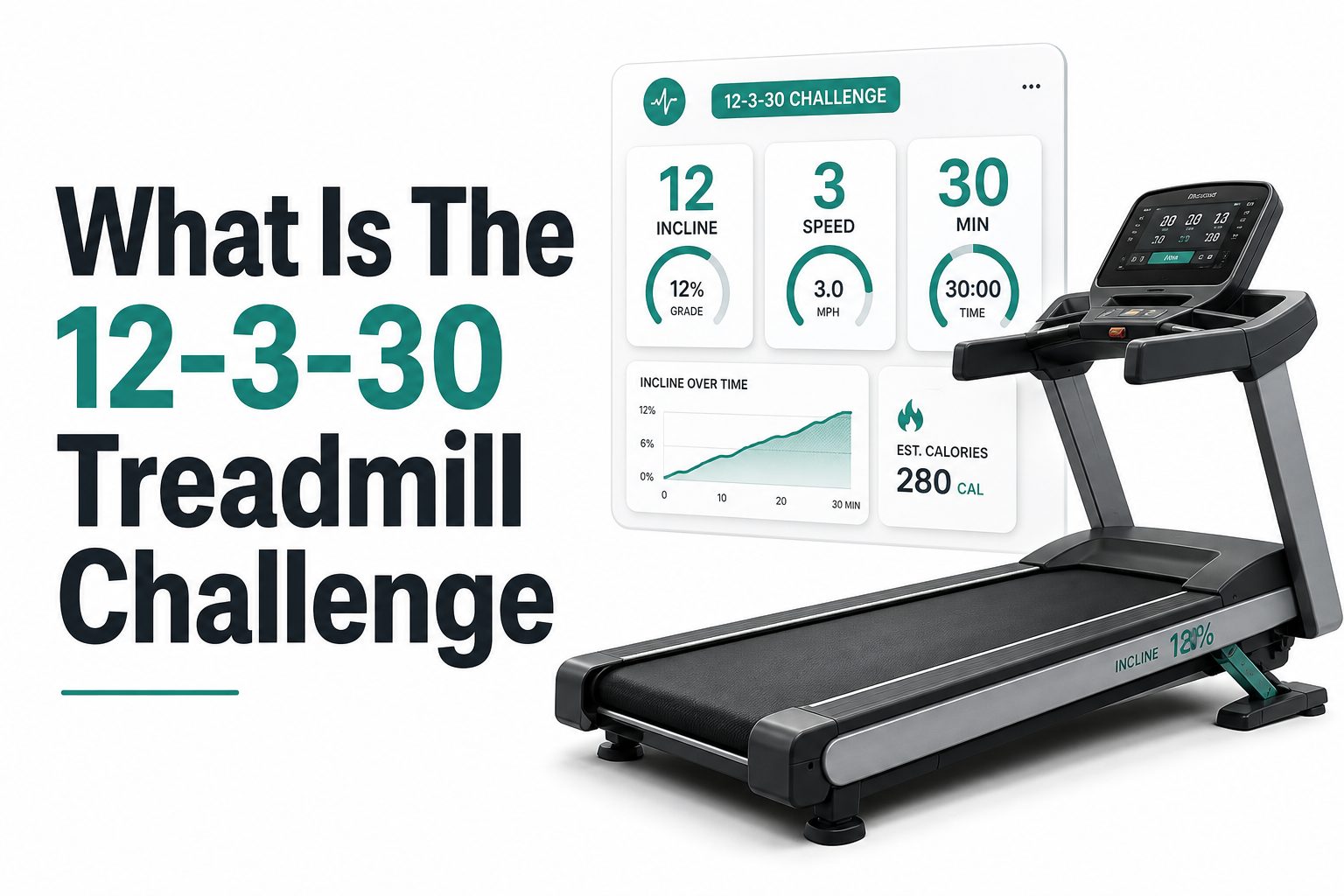
The 12-3-30 treadmill challenge is a walking workout built around three simple settings. You set the treadmill incline to 12 percent, speed to 3 miles per hour, and walk for 30 minutes at a steady pace.
The routine became popular because it feels simple, structured, and easy to remember. It does not require running, complex equipment, or advanced gym skills, which makes it appealing for people who want a focused cardio workout.
Although the workout looks straightforward, the 12 percent incline makes it more demanding than a flat walk. It challenges the legs, glutes, calves, and cardiovascular system while keeping impact lower than jogging or sprint intervals.
Why the 12-3-30 Method Became Popular
The method gained attention because it fits modern fitness habits well. Many people want workouts that are short, repeatable, and easy to track, especially when they have limited time or feel unsure about complicated gym routines.
Another reason for its popularity is that walking feels approachable. People who dislike running often see incline walking as a more realistic option, especially when they want to sweat, build stamina, and stay consistent without heavy joint stress.
The challenge also spread because progress feels measurable. Once someone can complete 30 minutes at the full settings, they can track endurance, posture, breathing, and recovery without needing a complex training plan.
Quick Setup Checklist
- Set the treadmill incline to 12 percent.
- Set the speed to 3 miles per hour.
- Walk for 30 minutes.
- Hold the rails only if balance is needed.
- Keep your posture tall and relaxed.
- Start lower if the full incline feels too intense.
- Wear supportive walking or training shoes.
- Stop if pain, dizziness, or unusual discomfort appears.
How the Workout Affects Your Body
Incline walking raises heart rate more than flat walking because your body works against gravity. The steeper angle asks the lower body to produce more force, which increases effort without requiring a running stride.
The glutes, hamstrings, calves, and hip muscles work harder on an incline. This can make the workout feel more like a strength-cardio blend, especially for people who usually walk on flat ground or spend long hours sitting.
Your core also plays a role during the session. Good posture helps you stay balanced, breathe better, and avoid leaning heavily on the handles, which can reduce the training effect and shift stress into the shoulders.
Main Benefits of the 12-3-30 Treadmill Challenge
One major benefit is improved cardiovascular fitness. A 30-minute incline walk can raise your heart rate into a productive training zone, helping your body become more efficient at using oxygen during steady movement.
The workout may also support weight management when paired with balanced nutrition and regular activity. Because incline walking increases effort, it can burn more calories than a casual flat walk at the same duration.
Another advantage is consistency. The clear formula removes decision fatigue, which helps people repeat the session several times per week. For many fitness goals, a repeatable routine matters more than a complicated one.
12-3-30 for Beginners
Beginners do not need to start with the full version. A 12 percent incline can feel steep, especially for people returning to exercise, managing extra body weight, or building stamina after a long break.
A practical starting point may be 6 incline, 2.5 speed, and 15 minutes. From there, you can add time first, then speed, then incline, depending on how your joints, breathing, and recovery feel.
For more gradual programming, our treadmill walking workout plan can help you build weekly structure without rushing the process. A slower ramp-up often leads to better consistency and fewer setbacks over time.
Beginner Progression Example
Week 1: 6 incline, 2.5 speed, 15 to 20 minutes.
Week 2: 7 to 8 incline, 2.6 to 2.8 speed, 20 to 25 minutes.
Week 3: 9 to 10 incline, 2.8 to 3 speed, 25 to 30 minutes.
Week 4: 10 to 12 incline, 3 speed, up to 30 minutes.
Use this as a flexible guide, not a rule. If your calves, knees, hips, or lower back feel irritated, reduce the incline and keep walking comfortably until your body adapts.
Common Mistakes to Avoid
A common mistake is holding the treadmill rails for the entire workout. Light support is fine for balance, but leaning your body weight into the handles makes the session easier and changes your natural walking mechanics.
Another mistake is starting too hard. The viral version looks simple, but steep incline walking can create calf tightness, shin discomfort, or lower back fatigue when your body has not built tolerance yet.
Poor posture can also limit results. Try to keep your chest open, shoulders relaxed, and gaze forward. Short, controlled steps usually work better than overstriding, especially when the treadmill incline is high.
Good Form for Better Results
Good form begins with an upright posture. Imagine your ribs stacked over your hips, with your feet landing under your body instead of far ahead. This position helps reduce braking forces and keeps movement smoother.
Your arms should swing naturally unless you need brief balance support. When your arms move with your stride, your body works more evenly, and the workout feels closer to outdoor hill walking.
Breathing matters as well. You should be working, but not gasping from the first few minutes. If you cannot maintain steady breathing, lower the incline or speed until the pace feels challenging but manageable.
Who Should Be Careful With This Workout
People with knee, hip, ankle, foot, or lower back issues should approach this workout carefully. Incline walking changes joint angles and muscle demands, which may feel helpful for some people and irritating for others.
Anyone new to exercise, pregnant, recovering from injury, or managing a heart condition should get guidance from a qualified health professional before pushing intensity. The workout is simple, but intensity still matters.
Pain is not a useful goal. Muscle fatigue and heavy breathing can be normal during training, but sharp pain, numbness, dizziness, chest discomfort, or unusual shortness of breath are signs to stop and seek support.
How Often to Do 12-3-30
Many people start with two or three sessions per week. This gives the body time to adapt while leaving room for strength training, mobility work, rest days, and other forms of movement.
Doing the workout every day is not necessary for results. In fact, repeating the same steep incline too often may overload calves, Achilles tendons, knees, or hips, especially if recovery and footwear are poor.
A balanced weekly plan works better for most people. Combine incline walking with resistance training, easier walks, and mobility work. Our beginner incline walking guide can help you adjust intensity across different fitness levels.
Sample Weekly Routine
Monday: 12-3-30 treadmill workout.
Tuesday: Strength training for lower body and core.
Wednesday: Easy flat walk or active recovery.
Thursday: 12-3-30 treadmill workout.
Friday: Upper body strength and mobility.
Saturday: Outdoor walk, cycling, or light cardio.
Sunday: Rest or gentle stretching.
This kind of schedule helps prevent overuse while still giving you enough cardio practice. The goal is not to prove toughness every day, but to build a routine your body can repeat.
12-3-30 and Weight Loss
The 12-3-30 treadmill challenge can support weight loss, but it does not work alone. Fat loss depends on long-term energy balance, food quality, sleep, stress, daily movement, and consistency across weeks and months.
Incline walking can help increase calorie expenditure because it raises intensity without requiring running. For people who enjoy walking, this makes it easier to stay active and repeat workouts without feeling mentally drained.
Still, the workout should not become punishment for eating. A better approach is to pair it with balanced meals, enough protein, hydration, strength training, and realistic habits that fit your actual lifestyle.
12-3-30 Versus Running
Compared with running, 12-3-30 usually has lower impact because one foot stays in contact with the treadmill more consistently. This can make it appealing for people who want cardio without the pounding of jogging.
Running may improve speed, aerobic capacity, and athletic performance more directly, especially for people training for races. Incline walking is better suited for steady conditioning, calorie burn, and lower-body endurance.
Neither option is automatically better. The better choice is the one you can perform safely, recover from well, and repeat consistently while still enjoying your overall training routine.
How to Make 12-3-30 Easier
If the full workout feels too hard, reduce only one variable at a time. Lowering the incline is usually the best first step because the 12 percent grade is the most demanding part.
You can also split the workout into intervals. Try five minutes at a lower incline, then three minutes at a higher incline, repeating until you reach 20 or 30 total minutes.
Another option is to keep the 30-minute duration but walk at 2.5 or 2.7 miles per hour. This allows your heart, calves, and hips to adapt without forcing the full challenge immediately.
How to Make 12-3-30 Harder
Once the full routine feels comfortable, avoid rushing into extreme settings. Instead, improve form, reduce rail use, increase walking efficiency, or add one extra weekly session if recovery is strong.
You can also add light strength training after the walk. Bodyweight squats, step-ups, glute bridges, and core exercises can complement the muscles used during incline walking without turning the workout into a grind.
Another advanced option is interval variation. Keep the base at 12-3-30, but add short bursts at 3.2 miles per hour or brief recovery periods at a lower incline for controlled progression.
Equipment and Safety Tips
Supportive footwear matters because incline walking loads the calves, arches, and forefoot more than flat walking. Choose shoes with good cushioning, stable support, and enough room for your toes to move naturally.
Warm up before starting the full settings. Five minutes at a lower incline and slower speed can help your ankles, calves, hips, and breathing adjust before the main 30-minute effort begins.
Cool down after the session instead of stepping off immediately. A few minutes of slow walking on a flat incline can help your heart rate settle and reduce sudden lightheadedness after a hard effort.
Nutrition and Recovery Support
You do not need a special diet for this workout, but your body does need enough fuel. Balanced meals with protein, carbohydrates, healthy fats, and fiber can support energy, recovery, and training consistency.
Hydration also matters. Sweating during incline walking can be noticeable, especially in warm gyms. Drinking water before and after training helps your body regulate temperature and maintain performance.
Recovery includes sleep and rest days. If your legs feel heavy, your calves stay tight, or your performance drops, your body may need easier movement rather than another steep treadmill session.
Tracking Progress Without Obsession
Progress is not only about calories burned. You can track how your breathing feels, how often you hold the rails, how quickly you recover, and whether the same workout feels smoother over time.
You can also note your perceived effort on a scale from one to ten. If the workout drops from a nine to a seven after several weeks, your cardiovascular fitness has likely improved.
Keep tracking simple. A short note after each session is enough for most people. Overcomplicated tracking can make a straightforward workout feel stressful, which reduces the chance of staying consistent.
Best Ways to Use 12-3-30 Long Term
The best long-term use is as one part of a complete fitness routine. It can be your main cardio workout, but it should not replace strength training, flexibility, easy movement, and recovery.
Strength training is especially useful because it supports joints and improves muscular balance. Incline walking mainly repeats one movement pattern, so lifting or bodyweight training helps cover muscles and ranges of motion it misses.
Long-term success also depends on enjoyment. If you like the structure, keep it. If it becomes boring, rotate it with outdoor walking, cycling, rowing, classes, or other cardio formats that keep you active.
Conclusion
The 12-3-30 treadmill challenge is popular because it is simple, repeatable, and effective for steady cardio. By setting the treadmill to 12 incline, 3 miles per hour, and 30 minutes, you create a focused walking workout.
It can support endurance, lower-body strength, calorie burn, and fitness consistency when used wisely. Beginners should scale the incline, speed, or time instead of forcing the full version before their body is ready.
If you have been asking what is the 12-3-30 treadmill challenge, the answer is simple: it is an incline walking routine that can be useful when matched with good form, smart recovery, and balanced training.
FAQ
Is 12-3-30 good for beginners?
Yes, but beginners should modify it. Starting at the full 12 percent incline may be too intense for some people. Lower the incline, reduce speed, or shorten the session until your stamina and joints adapt comfortably.
Can 12-3-30 help with weight loss?
It can support weight loss by increasing calorie burn and improving consistency. Results depend on nutrition, total activity, sleep, and long-term habits. The workout works best as part of a balanced routine, not as a standalone fix.
Should I hold the treadmill handles?
Use the handles briefly if you need balance, but avoid leaning on them throughout the workout. Holding too much body weight through your arms reduces effort and changes your walking form, making the session less effective.
How many times per week is best?
Two to four sessions per week works well for many people, depending on fitness level and recovery. Pair it with strength training and easier movement days so your calves, knees, hips, and lower back get enough recovery.
Is 12-3-30 better than running?
It depends on your goals. 12-3-30 offers lower-impact cardio and strong incline walking benefits, while running is better for speed and race fitness. The best option is the one you can do safely and consistently.
0 Comments