
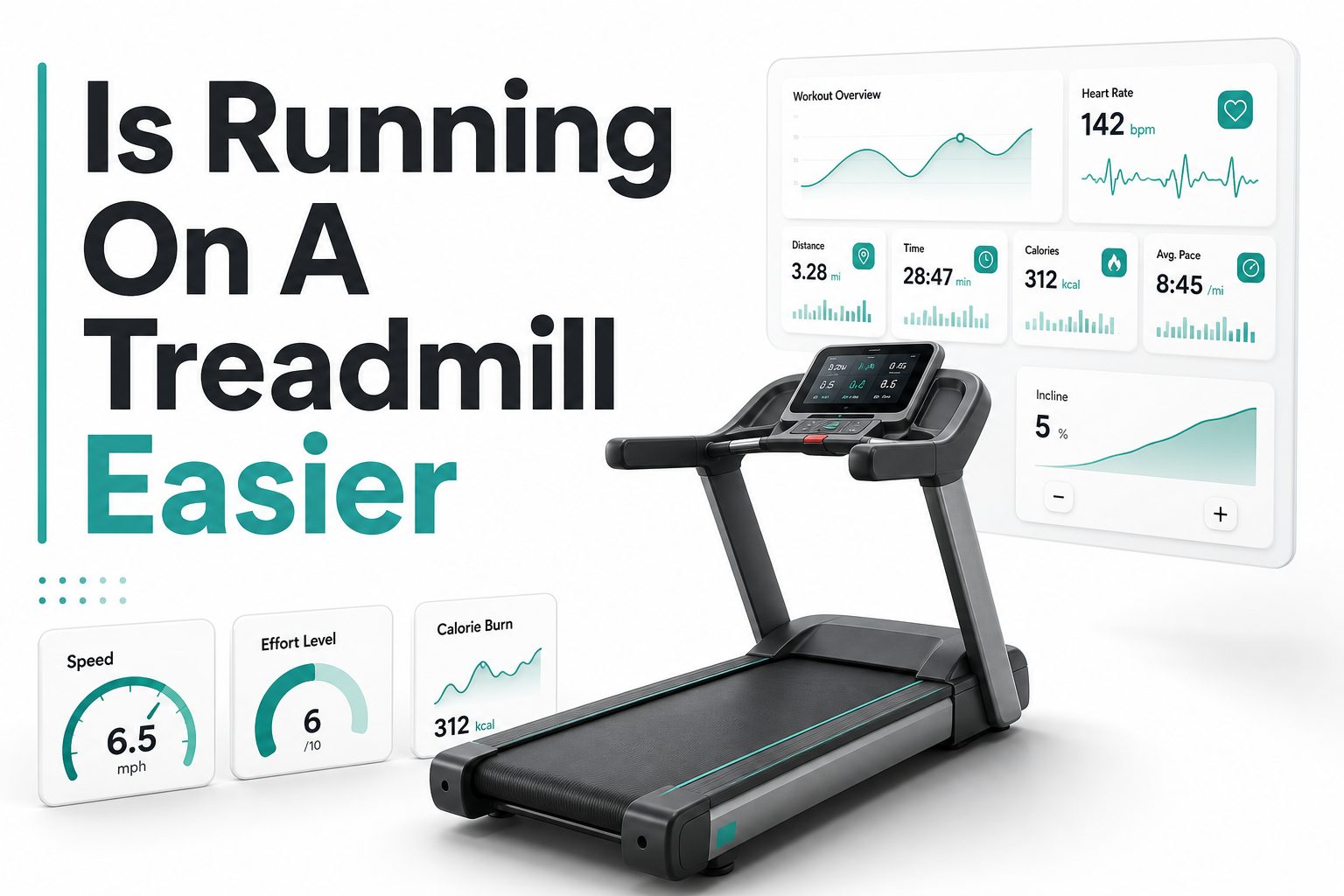
Many runners ask this because treadmill miles often feel smoother, more controlled, and less affected by outside conditions. The short answer is that treadmill running can feel easier, but the full answer depends on pace, incline, effort, running form, and training goals.
A treadmill belt moves beneath your feet, while outdoor running requires you to push your body across changing ground. That difference can reduce some physical demands indoors, especially when the belt speed stays steady and the surface remains flat.
Still, treadmill running is not automatically easy. Heat, boredom, poor pacing, lack of airflow, and long steady efforts can make indoor miles mentally and physically demanding. The better question is how treadmill running changes your effort compared with outdoor running.
Why Treadmill Running Often Feels Easier
Treadmills remove many variables that make outdoor running harder. There is no wind resistance, no uneven pavement, no sharp turns, and no weather changes. This creates a controlled setting where your body can settle into rhythm with fewer interruptions.
The treadmill deck also gives a slightly cushioned surface. For many runners, that softer landing feels easier on the joints than concrete or old asphalt. Less impact stress can make the run feel smoother, especially during easy runs or recovery sessions.
Pacing is another major factor. Outside, pace can drift without you noticing. On a treadmill, the machine holds the speed for you. That steady rhythm can help runners avoid sudden surges, slowdowns, and effort spikes that often happen outdoors.
How the Moving Belt Changes Effort
The moving belt supports consistency, but it does not run for you. Your legs still lift, land, stabilize, and produce force. The difference is that your environment is fixed, which may reduce some of the extra work required outside.
Outside, you need to push against the ground and manage small changes with every step. Indoors, the surface stays predictable. This can reduce the stabilizing work from your ankles, hips, and core, especially on a flat treadmill.
Some runners feel the belt helps with leg turnover. Others feel it changes their stride in an awkward way. Your experience depends on treadmill quality, running form, speed, and whether you are comfortable letting the belt set the rhythm.
Key Reasons Indoor Running Can Feel Easier
- No wind resistance affects your pace.
- The running surface stays flat and even.
- Speed remains controlled by the machine.
- The deck usually feels softer than pavement.
- Weather, traffic, and route changes are removed.
- Hydration and temperature control are easier to manage.
The Role of Wind Resistance
Wind resistance is one of the biggest differences between indoor and outdoor running. Even on a calm day, outdoor running creates air resistance because your body moves forward through space. On a treadmill, your body stays mostly in one place.
At slower paces, wind resistance matters less. At faster paces, it becomes more noticeable. This is why treadmill running can feel especially easier during tempo runs, intervals, or faster steady efforts where outdoor air resistance would increase the workload.
Many coaches suggest using a slight incline to better match outdoor effort. A 1 percent incline is often used as a practical adjustment. It is not perfect for every runner, but it can make treadmill running feel closer to outside conditions.
Why a One Percent Incline Helps
A small incline can increase the energy cost of treadmill running without making the workout feel like hill training. It adds mild resistance and reduces the difference caused by the lack of outdoor air movement.
This does not mean every treadmill run needs incline. Easy recovery runs can stay flat if comfort is the main goal. For race-specific training, though, a slight incline may help create a more realistic effort.
Incline also changes muscle demand. Your calves, glutes, and hamstrings may work harder as the grade rises. Too much incline can change the workout entirely, so small adjustments are usually better than steep settings for normal runs.
Simple Treadmill Settings for Better Training
- Use 0 percent incline for recovery runs or very easy mileage.
- Use 1 percent incline for steady runs that mimic outdoor effort.
- Use 2 to 4 percent incline for controlled hill-style workouts.
- Avoid steep inclines on every run because they may overload calves.
- Adjust speed based on effort, not only the number on the screen.
Surface and Impact Differences
Treadmills usually have more shock absorption than outdoor surfaces. This can reduce the pounding that many runners feel on sidewalks, roads, or hard tracks. For runners managing soreness, treadmill runs may feel more forgiving.
Outdoor terrain asks the body to adapt constantly. Small cracks, slopes, grass patches, gravel, and curbs all change the way your foot lands. Those tiny changes build stability, but they also add fatigue over longer distances.
A treadmill surface is repetitive. That can be helpful for controlled workouts, but it may also repeat the same movement pattern for thousands of steps. Some runners feel better indoors, while others develop tightness from the lack of variation.
Pacing Control and Mental Load
One reason treadmill running feels easier is that the machine removes pacing decisions. You choose a speed, then follow it. This can help runners stay disciplined during tempo runs, intervals, and easy runs that often become too fast outdoors.
Outside, pacing requires constant judgment. You react to hills, turns, pedestrians, traffic lights, and changing terrain. This adds mental effort, even when the physical pace looks similar on a watch or training app.
The treadmill can also feel harder mentally because the scenery does not change. A thirty-minute run indoors may feel longer than the same effort outside. Physical ease and mental ease are not always the same thing.
Useful Internal Resources
For practical form and pacing advice, read our treadmill running tips guide.
For planning balanced weekly mileage, visit our beginner running schedule resource.
When Outdoor Running Feels Harder
Outdoor running often feels harder because the environment keeps changing. Even small hills, street crossings, and rough surfaces interrupt rhythm. Your body spends extra energy adjusting stride length, balance, and effort throughout the run.
Temperature also matters. Heat raises heart rate and makes normal pace feel harder. Cold air can affect breathing and muscle stiffness. Rain, humidity, and wind can all change how much energy your body uses.
Outdoor routes can also create hidden effort. A route may look flat on a map but include gradual climbs, cambered roads, or frequent turns. These details can make outside miles feel more demanding than treadmill miles at the same pace.
When Treadmill Running Feels Harder
Treadmill running can feel harder when the room is warm or poorly ventilated. Without natural airflow, sweat builds faster and body temperature rises. This can increase perceived effort even when the pace is moderate.
The fixed pace can also become demanding. Outside, you naturally slow down for a few seconds when needed. On a treadmill, the belt keeps moving unless you manually change speed, which can make fatigue feel more immediate.
Mental fatigue plays a large role. Staring at a console or wall can make time feel slow. Some runners use music, structured intervals, or varied incline changes to keep focus without turning every treadmill run into a hard session.
Treadmill Running Challenges to Watch
- Indoor heat can raise heart rate quickly.
- Fixed pace may feel unforgiving during tired moments.
- Lack of scenery can make runs feel longer.
- Repeated stride patterns may cause tightness.
- Poor treadmill calibration can make pace inaccurate.
- Handrail use can reduce workout quality.
Does Treadmill Running Build the Same Fitness
Treadmill running can build strong aerobic fitness. Your heart, lungs, and muscles still work hard when the pace and duration match your training needs. Many runners maintain or improve fitness through consistent treadmill workouts.
The main difference is specificity. If you are training for an outdoor race, outdoor running prepares your body for wind, turns, road surfaces, hills, and pacing choices. Treadmill work can support the plan, but outside practice still matters.
For general fitness, weight management, or routine cardio, treadmill running is highly effective. The best workout is the one you can repeat consistently with good form, controlled effort, and enough recovery between harder sessions.
How Pace Accuracy Can Differ
Treadmill pace is not always perfectly accurate. Machines can vary based on calibration, belt condition, motor quality, and runner weight. A displayed pace may feel different from the same pace measured by GPS outside.
GPS watches are also imperfect. Tall buildings, trees, sharp turns, and signal errors can distort outdoor pace. This means neither treadmill data nor outdoor data is flawless, especially when comparing single workouts.
Effort is often the best guide. Heart rate, breathing, stride control, and perceived exertion give useful context. If treadmill pace feels too easy or too hard compared with outdoor runs, adjust based on your body rather than chasing numbers.
Better Ways to Compare Effort
- Compare heart rate at the same perceived effort.
- Note breathing rhythm across similar run durations.
- Track how your legs feel after the workout.
- Use incline only when it supports the workout goal.
- Compare trends over several runs, not one session.
- Focus on consistency more than perfect pace matching.
How Running Form Changes Indoors
Some runners shorten their stride on a treadmill. Others overstride because the belt feels predictable. Either pattern can change muscle use and effort. Good form still matters indoors, even when the surface feels easier.
Try to stay tall, relaxed, and balanced over your feet. Avoid leaning back against the belt or reaching too far forward with each step. Your foot should land naturally beneath your body without forcing a dramatic stride change.
Handrails can reduce the training effect. Holding them changes posture, unloads some body weight, and can create false pace confidence. If balance is a concern, slowing the treadmill is usually better than gripping the rails during running.
Best Uses for Treadmill Training
Treadmills are excellent for controlled workouts. Tempo runs, intervals, progression runs, and recovery sessions are easier to manage when speed and incline are predictable. This makes treadmill training useful for runners with specific pace targets.
They are also helpful when weather makes outdoor running unsafe or unpleasant. Heat, ice, storms, poor air quality, and darkness can all interfere with training. A treadmill keeps the routine available when conditions are not ideal.
Treadmill running also supports busy schedules. You can run near home, monitor time closely, and stop easily if needed. For parents, professionals, and runners with limited daylight, that convenience can keep training consistent.
Smart Treadmill Workout Ideas
- Easy run: 30 to 45 minutes at relaxed effort.
- Progression run: start easy and increase pace every 10 minutes.
- Tempo run: warm up, run 15 to 25 minutes steady, cool down.
- Hill session: use short incline repeats with easy flat recovery.
- Interval run: alternate faster segments with controlled recovery.
- Recovery jog: keep pace gentle and incline low.
Best Uses for Outdoor Running
Outdoor running develops skills that treadmills cannot fully copy. You learn how to pace through changing terrain, manage wind, handle turns, and stay relaxed when conditions shift. These skills matter for racing and long-term running confidence.
It also builds more varied strength. Uneven ground requires subtle adjustments from the feet, ankles, hips, and core. Over time, that natural variation can improve coordination and resilience when mileage increases gradually.
Outdoor running can feel more engaging. Routes, scenery, fresh air, and natural movement help many runners stay motivated. Enjoyment matters because consistency is easier when the habit feels connected to real life, not only workout data.
How to Make Treadmill Running More Like Outside
Set the treadmill to a small incline when the workout calls for realistic outdoor effort. For many steady runs, 1 percent works well. For recovery days, flat running is acceptable if the goal is lower stress.
Vary the workout slightly. Small changes in speed or incline can reduce the repetitive feel of treadmill running. Even gentle variation every few minutes can make the session feel more natural without making it overly intense.
Use effort as your anchor. If you are preparing for road races, combine treadmill sessions with regular outdoor runs. This gives you controlled training indoors while keeping your body familiar with real surfaces and weather.
Balanced Weekly Approach
- Use treadmill runs for consistency and controlled pace work.
- Use outdoor runs for route practice and race preparation.
- Keep easy days truly easy in both settings.
- Rotate surfaces when possible to reduce repetitive stress.
- Add incline carefully instead of making every run harder.
- Let recovery guide the next workout.
Common Mistakes on the Treadmill
Running too fast is common because the display makes pace feel precise. Many runners increase speed to match outdoor goals, even when effort is already high. This can turn easy runs into moderate workouts without noticing.
Another mistake is using steep incline too often. Incline has value, but daily hill-style running can overload calves, Achilles tendons, and feet. A small incline is usually enough for realistic effort on normal runs.
Some runners ignore temperature. Indoor spaces can become warm quickly, especially without a fan. Better airflow, lighter clothing, and water nearby can make treadmill running more comfortable and keep effort closer to the intended zone.
How Beginners Should Approach Treadmill Running
Beginners can benefit from treadmills because the environment is predictable. Speed can be adjusted quickly, walking breaks are simple, and the surface feels stable. This makes it easier to build confidence during early running weeks.
Start with short sessions and relaxed effort. A run-walk format works well for many new runners. The goal is to build time on feet, improve comfort, and avoid pushing every session too hard.
Outdoor running can be added gradually. One or two outside runs per week help the body adapt to real terrain. Combining both options gives beginners flexibility without making training feel limited to one setting.
Practical Beginner Session
- Walk for 5 minutes to warm up.
- Jog for 1 to 3 minutes at easy effort.
- Walk for 1 to 2 minutes to recover.
- Repeat for 20 to 30 minutes.
- Cool down with 5 minutes of walking.
- Increase total running time slowly.
How Experienced Runners Can Use Treadmills
Experienced runners can use treadmills for precision. Controlled pace and incline make it easier to hit planned workouts, especially during bad weather or when outdoor routes are not suitable for speed work.
Treadmills also reduce planning friction. Long runs, tempo blocks, and recovery miles can happen without traffic stops or route changes. This is useful during high-volume training phases when consistency matters more than scenery.
However, experienced runners preparing for outdoor races still need road-specific work. Race pace outside, long runs on real terrain, and practice with wind or hills help transfer treadmill fitness into stronger performance.
The Final Answer on Treadmill Difficulty
So, is running on a treadmill easier than running outside. In many cases, yes, because the treadmill removes wind resistance, weather, uneven ground, and pacing variation. That controlled setting can make the same pace feel smoother.
At the same time, treadmill running has its own challenges. Heat, boredom, fixed pace, and repetitive stride patterns can increase effort. A treadmill is not a shortcut. It is a different training environment with different demands.
The most useful approach is to match the tool to the goal. Use treadmills for consistency, control, and convenience. Use outdoor runs for terrain practice, race preparation, and variety. Both can build fitness when used with purpose.
Conclusion
Is running on a treadmill easier depends on how you measure effort. Treadmills often feel easier because they remove wind, weather, surface changes, and pacing decisions. A slight incline can make indoor running feel closer to outdoor effort.
Outdoor running still offers benefits that treadmills cannot fully replace. It trains balance, pacing judgment, terrain adaptation, and mental flexibility. Runners preparing for outdoor events benefit from spending regular time outside.
The best choice is not about one option being better. A smart plan can include both. Treadmill running supports consistency and control, while outdoor running adds real-world strength, variety, and race-specific preparation.
FAQ
Is treadmill running easier on the knees
Treadmill running may feel easier on the knees because many decks offer more cushioning than concrete. It does not remove injury risk, though. Running form, training volume, shoe choice, strength, and recovery still matter.
Does a treadmill make you run faster
A treadmill can help you hold a steady faster pace because the belt controls speed. That does not automatically make you faster outside. Fitness gains depend on effort, consistency, workout structure, and recovery.
Is 1 percent incline needed for every treadmill run
A 1 percent incline can help match outdoor effort during steady or faster runs. It is not needed for every session. Recovery runs, beginner workouts, and easy mileage can be done flat when comfort is the priority.
Can treadmill running replace outdoor running
Treadmill running can replace many workouts for general fitness and consistency. For outdoor races, it is better to include some outside runs. Real terrain, weather, turns, and pacing practice improve race readiness.
Why do I feel slower outside than on a treadmill
Outdoor running includes wind resistance, surface changes, turns, hills, and pacing decisions. These factors can make the same pace feel harder. Treadmill pace may also differ from real speed if the machine is not calibrated.
0 Comments